 ultimate-guide
Knitting Community for Beginners Online: 2026 Guide
Table of Contents
- Why a Knitting Community for Beginners Online Changes Everything
- Online Knitting Groups for Beginners: Where to Find Your People
- Knitting Forums for Beginners: Structured Help That Sticks
- Beginner Knitting Help Online: Getting Unstuck Without the Guesswork
- Online Knitting Classes for Beginners: Structured Learning That Builds Skill
- Community Etiquette, Safety and Privacy: Participating Well
- Your First Month in an Online Knitting Community
- Conclusion: Making the Community Work for You
- Frequently Asked Questions
Last Updated: October 12, 2026
Why a Knitting Community for Beginners Online Changes Everything
Learning to knit from a book or a video works, until you hit a dropped stitch at 9pm and have nobody to ask. That is where a knitting community for beginners online earns its place. A knitting community is a group of people who share patterns, troubleshoot problems and encourage each other, whether they meet in person, on a forum, or inside a social media group. At Hooked on Molong, we talk to new knitters every week, and the ones who join a community early tend to stick with the craft.
Online Knitting Groups for Beginners: Where to Find Your People
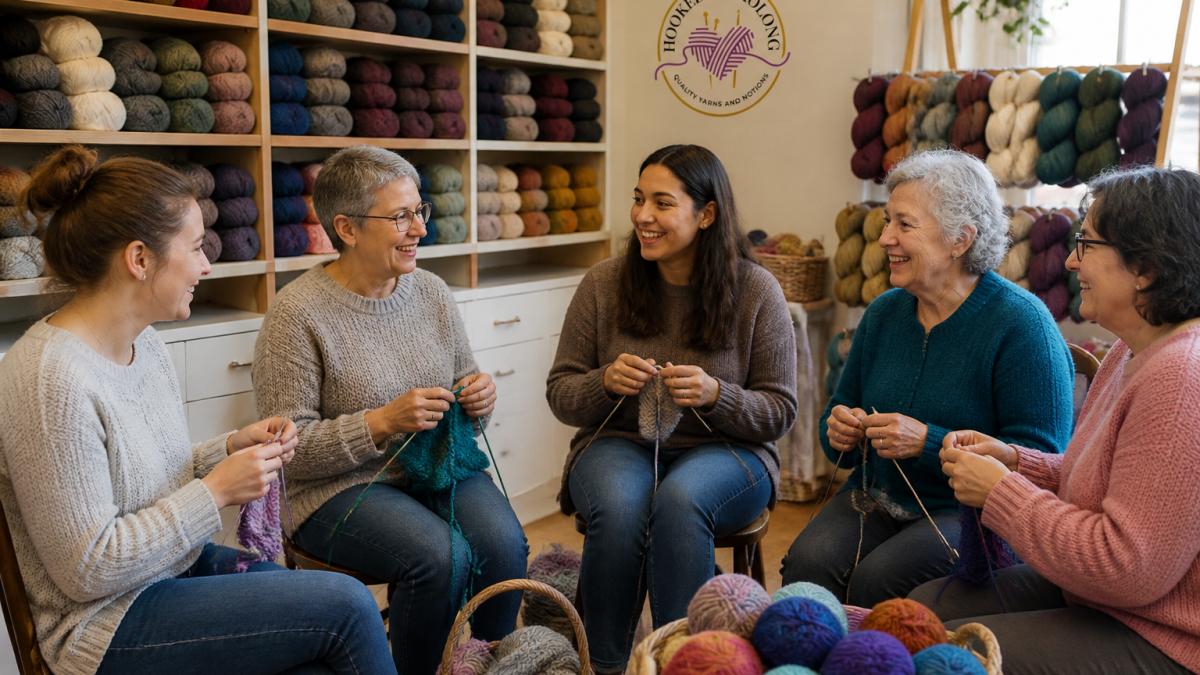
Online knitting groups for beginners come in several shapes, and the right one depends on how you like to learn and how quickly you want a reply. Most beginners end up in one of four broad categories, and each has a distinct feel once you are inside it.
- Social media groups where members post photos, ask basic questions and share finished projects. These move fast, which is great for a quick answer but hard to search later.
- Dedicated forums with searchable threads and structured categories. Slower pace, but the archive is a genuine reference library you can mine before you ever post.
- Video-based groups built around live or recorded knit-alongs. Best when you need to see a technique worked in real time rather than read about it.
- Local shop communities that run online check-ins alongside in-person meetups. The hybrid model suits people who want a familiar face attached to the username.
Matching the Community to How You Learn
Rather than joining the biggest group you can find, match the format to what you actually need from it. Ask yourself three questions before you commit.
Do you want feedback, conversation, or instruction? A forum or a moderated group is strongest for feedback on a specific problem, because threads stay readable and answers are considered.
How much structure do you want? Some beginners thrive with a weekly knit-along that gives them a deadline and a shared project.
What to Look For in a Beginner-Friendly Group
The best beginner group is one that welcomes basic questions without making anyone feel silly. Look for pinned posts explaining the rules, a clear place to introduce yourself, and moderators who answer new members promptly. Check whether the group separates beginner projects from advanced work, because a feed full of intricate lace can be intimidating when you are still mastering the knit stitch. Size matters less than tone. A small, active group where your question gets three helpful replies beats a huge one where it disappears.
Access, Cost and Time Zones
A community only works if you can actually take part in it. Before you join, check a few practical details that are easy to overlook.
- Cost. Many groups are free to join, while structured classes and some shop-run circles charge a fee. Free groups are not automatically worse; paid ones usually include a tutor's time.
- Time zones. A live knit-along scheduled on the other side of the world may fall in the middle of your night. Recorded sessions and text-based groups sidestep this entirely.
- Accessibility. Look for captions on video sessions, text alternatives to audio, and moderators who are willing to repeat or rephrase instructions. If you have a visual impairment or a motor difference that affects how you hold needles, a group that has clearly thought about accessibility will usually say so in its welcome post.
- Language and tone. A group that writes its rules in plain language and pins a code of conduct tends to be more welcoming than one that leaves expectations unspoken.
A common pattern among beginners is to join three or four groups, find that one feels comfortable, and quietly stop visiting the rest. That is not failure; it is how you find your people.
Knitting Forums for Beginners: Structured Help That Sticks
Knitting forums for beginners suit people who like to search before they ask. Because forum threads stay searchable, you can often find that someone has already solved your exact problem, whether it is a twisted cast-on or a pattern that does not add up. The trade-off is pace. Forums move more slowly than social media, but the answers tend to be more considered.
How to Ask a Question That Gets a Useful Answer
A well-framed question gets a useful answer far faster than a vague one. Include the pattern name, the yarn and needle size you are using, and a photo if you can. Say what you expected to happen and what actually happened. "My stitch count keeps growing on row 4 of this pattern, here is a photo" gives helpers something to work with. "Help, my knitting is wrong" does not. Patience helps too: most forum members are volunteers answering between their own projects.
Beginner Knitting Help Online: Getting Unstuck Without the Guesswork
Beginner knitting help online works best when you match the problem to the right source. Simple questions suit a quick group post; complicated ones benefit from a video call or a written tutorial you can pause. A common mistake is waiting until a small error becomes a large one. Fixing a dropped stitch ten rows back is far harder than catching it immediately. When you ask for help, describe the stitch you were working and the row number.
Online Knitting Classes for Beginners: Structured Learning That Builds Skill
Online knitting classes for beginners provide the structure that self-teaching often lacks. A good course sequences skills: cast-on, knit stitch, purl stitch, then simple shaping, so you build on what you already know rather than jumping around. Live classes add something a recorded video cannot, which is the chance to ask an expert tutor a question in real time. Recorded courses win on flexibility, since you can rewatch a tricky section as often as you like.
Community Etiquette, Safety and Privacy: Participating Well
Participating well keeps a community enjoyable for everyone, and it protects you too. Most of what follows is simple courtesy, but a few points are about your own safety and are worth reading before you post your first photo.
The Etiquette Basics
- Read the group rules before posting, and introduce yourself when you join. A short hello in the designated thread gets you recognised faster than a silent first question.
- Give credit when you share someone else's pattern or idea. Link back to the designer or the original post rather than reposting the image as your own.
- Keep feedback kind, since most members are learning alongside you. "Your tension looks even" is more useful than "that's wrong".
- Stay on topic in themed threads. A beginner-help thread is not the place to advertise your yarn stash sale.
- If you ask for help, come back and say what worked. Closing the loop helps the next beginner who searches the same problem.
Privacy Habits Worth Building Early
Privacy matters more than many newcomers realise, and the risks are mostly about what your photos and profile reveal rather than anything you type.
- Use a username rather than your full name if you prefer. Many knitters do, and nobody thinks twice about it.
- Check a group's settings before sharing photos that show your home. Background details such as a street sign, a distinctive view, or a parcel with your address visible can identify where you live.
- Crop or blur anything identifiable before you post. A quick crop of the knitting itself is usually all anyone needs to see.
- Never share your address, workplace, or daily routine in a public thread, even in a group that feels friendly.
- Be cautious about private messages from strangers offering to sell yarn, tools, or services. Unsolicited sales approaches are a common nuisance in hobby groups, and a genuine seller will usually have a public shop or profile you can check first.
- Review your profile's visibility settings periodically. What you were comfortable sharing when you joined may not match what you want visible six months later.
If Something Feels Off
Trust your instincts. If a group feels pushy, if a moderator dismisses a genuine safety concern, or if someone pressures you for personal details or payment outside the group's normal channels, you are free to leave. You do not owe anyone an explanation. Most platforms let you report a post or a member, and leaving a group does not prevent you from joining another one that suits you better. A good community should feel encouraging, not pressured, and the vast majority do.
Your First Month in an Online Knitting Community
A gentle plan makes the first month manageable and keeps momentum going:
| Week | Focus | What to Do |
|---|---|---|
| 1 | Join and observe | Pick two groups, read the rules, introduce yourself |
| 2 | Ask one question | Post a photo of your first swatch and ask for feedback |
| 3 | Share a small win | Post your progress and comment on someone else's project |
| 4 | Try a group project | Join a beginner-friendly knit-along or class |
The goal is not to master everything at once. It is to build the habit of showing up, asking, and helping where you can. Knitter connections grow quickly when you participate regularly, and those connections are what keep beginners going when a project gets fiddly.
Conclusion: Making the Community Work for You
Finding the right knitting community for beginners online takes a little trial and error, but the payoff is real: better support, faster learning, and friends who share your enthusiasm. When you are ready for quality yarn to match your new skills, Hooked on Molong can help. We offer a curated selection of yarns and notions sourced locally and abroad, friendly personalised assistance to help you choose the right fibre for your project, and free shipping on orders over $150.
Frequently Asked Questions
Where can beginners find an online knitting community?
Start with a dedicated knitting community platform that has beginner-specific groups, then add one or two social media groups and a forum for questions. Look for spaces that welcome complete beginners, have clear posting rules, and offer free patterns and step-by-step instruction. A good knitting community for beginners online will have recent posts, active moderators and members who answer basic questions without judgement. Try two or three spaces for a week before deciding which one fits.
What is the best knitting forum for beginners?
The best knitting forums for beginners are the ones with an active beginner section, searchable threads and moderators who keep discussions civil. Look for forums where members share project advice, pattern sharing and photos of finished work, because seeing other beginners succeed builds confidence. Check how quickly questions get answered and whether replies include practical detail rather than just links. Join one forum first, read for a few days, then post an introduction before asking for beginner knitting help online.
Is a large knitting platform suitable for new knitters?
Yes, large platforms can suit new knitters, but they can feel overwhelming at first. Create a profile, join two or three beginner-friendly groups rather than dozens, and use the search function before posting a question that may already be answered. Many platforms also host online knitting classes for beginners, free patterns and project sharing threads. Set a weekly time to check in so the community becomes part of your routine rather than another inbox to clear.
How do I share my knitting projects and get helpful feedback?
Post a clear photo in natural light, note the yarn and needles you used, and ask one specific question such as whether your tension looks even. Mention that you are a beginner so members pitch their advice at the right level. Thank people who reply and follow up with what worked. Sharing in a knitting circle or project thread builds knitter connections and gives you honest, useful feedback rather than vague praise.